Universities in the Netherlands have a mixed population, with thousands of international students arriving each year. In this melting pot of cultures, how much room is found to speak about the gospel? And is that situation different now than a few years ago? Alex Ndemezo came to the Netherlands from Rwanda in 2020 to study theology. Now he serves as a pastor and is involved in international student ministry in Rotterdam. We asked him about his experiences.
“I came in the Netherlands in August 2020, in the time of the pandemic lockdowns, in the first opening of international flights. It took two, three weeks and then they closed again. I was studying at Tyndale Theological Seminary in Badhoevedorp and there were no other African students who came that year, because the airports were closed. Somehow God opened the window for me so I could come.”
Conversion
“I came here with the mindset that I would not do other things than ministry. So, every moment when the COVID restrictions were lifted in 2020, I would try to find people to talk to about the gospel. My first experience in seeing how the Dutch people think, was that I talked to a Dutch student who wasn’t a believer. He was curious about faith and the reason why we leave our countries and come to study theology here. So, I asked him if we can open the Book of John together to see why. It was his first time to read the Bible. We started reading about how Jesus created everything. That was a foreign idea for this student. To me that was a shock because fin Rwanda, whenever I spoke to nonbelievers, they never struggled with the question of creation or the existence of God. Mostly my work in Rwanda would be focused on helping people to see that Jesus is their Savior and He is God who came into the world to seek and to save them. Rather than beginning with “you’re God’s creation and He created you in his own image to live for Him”. That was tough, because I wasn’t ready for that. After working with that young man for two, three months he gave his life to Christ. Then I realized that it is possible. It was like a sign that actually you can talk to people here and they can be believers. That is how I caught the fire to start evangelizing people in the Netherlands and to do student ministry. That’s where the journey started.”
Church planting
“After that I got an opportunity from people who wanted to plant an English-speaking church reaching students at Erasmus University. From 2021 until now, I’ve been going to Erasmus University. When I started, there was no church. I was planting it from scratch. I had to find the first person, the second, the third, and then we started meeting. After some time, we merged with another group that were doing the similar things on campus, and we formed a church, called Gateway City Church (which I’m pastoring) and a student group, called Students for Christ. We have weekly group meetings with around 70 students. We also have small groups, we do mission trips abroad, we run Discover Jesus courses, and we go on campus to talk to students about faith. The entire group is over 100 students, mixed internationals and Dutch. It is a very diverse group from all corners of the world, from Jordan, China, Hong Kong, Kenya, Zambia, Zimbabwe, Iran, Brazil, and from the Netherlands, Germany, Poland, and France.”
“In 2024, 2025, we started seeing a lot of curiosity in young people. They were more open and not so defensive. It does mean that they are not only open to Christianity, but to all kinds of spirituality.“
Openness for the gospel
“Compared to 2022, there is a big difference in the openness in the Dutch young people. In 2022, when COVID was over, we started going on campus and talking to individuals. When we go on campus, we don’t go looking for internationals, we just look for everyone who’s open to having a conversation. When we would get rejections, people who didn’t want to talk about faith, the majority would be Dutch. But in 2024, 2025, we started seeing a lot of curiosity in young people. They were more open and not so defensive. Of course, that doesn’t mean that they agree with you on everything, or that they are embracing faith. It does mean that they are not only open to Christianity, but to all kinds of spirituality. They are trying to explore something beyond physical reality. That is an opportunity for Christians to be present because students are seeking and asking questions about faith. When you help and guide them to the truth, then there are good chances that they see Christ and his message as more appealing than other forms of faith.”
“Some students are creating their own mosaic. They pick and choose what they want from each faith. They pick from Buddhism and do yoga and meditation, they read the Bible and pray, and they also read horoscopes. They’re creating their own way of believing. That’s one trend. Another trend is those who really want to believe in God and they are hungry and you can help them along the way. This is true for both the Dutch and the Dutch internationals – second generation migrants who grew up here. You don’t easily recognize them as Dutch until you start talking to them.”
International students
“With internationals, it’s a different story. When you go to campus in the first weeks of the academic year, you meet many new international students who are lonely, who are struggling in the new country and longing for community. If they come from a collective culture, then they feel like a fish out of the water, and they’re trying to survive. Some of them come to a community, not necessarily because they want faith. They are looking for belonging, sometimes because suddenly they are getting exposed to a freedom they are not used to. They would rather stay with a group that will help them keep in check. When such people come to our group, we work with them and try to answer their questions, and they may become Christians or may continue to come without believing in the God that we believe in. But they like the community. They like having people who accept them.”
“There are also those who come and really don’t want anything to do with faith until you sit with them and discuss with them and they become curious. They have a lot of questions. I remember meeting an Iranian guy on campus. He said, after coming to the Netherlands, he didn’t understand if the idea of truth still exists. I asked him why. He said, you know, I came here and I saw women riding bikes. In my country, that is not accepted. When they see you riding a bike, they already put you in a category. The same for the way women dress and conduct themselves. Then he started questioning what he believed to be true. Is truth still valid or is it defined by a community? You meet this kind of people. They come, they get shocked, their culture is crushed, and they feel like they have lost everything they thought was true. Such people are open to thinking along with you, to help put everything in the right perspective. And then you come to the root cause of the problem, that they believed in the culture, Islam or Christianity, rather than believing in the God of the Bible, the Christ of the Bible. So, then we try to cut through all the cultures to see what exactly the basics of faith would be, especially faith in Christ, and how that becomes translated in different cultures.”
“When you go to campus in the first weeks of the academic year, you meet many new international students who are lonely, who are struggling in the new country and longing for community.”
European students
“I would say the level of resistance that the Dutch students have is quite different from European students like the Polish, German, or French. In 2022, there was that kind of hardness of heart with the Dutch – the moment they realize that you’re a Christian and you are trying to talk to them about faith, they would tell you: it’s good for you, but not for me, let’s not talk about it. However, if you meet French or German students, they would be open to those questions. Not necessarily that they will agree with you, or become believers, but they are open to discussion. The reason is that people who come to live in foreign countries have a different mentality. Everything is new. Even though you’re in Europe, you’re not in your home country. You’re used to facing challenges, like speaking another language. When someone asks you faith questions, you have that kind of mindset to talking, to seeing this person as someone that you can connect with, also when you don’t agree.“
Serving as an African pastor
“What is it like doing this work as an African pastor? There are many African pastors around, but you will find that most of them come and start, say, a Rwandan church. That is not the way I see things. If you do that, you are not advancing the gospel. You are bringing your community and culture together, but that is not what Christ gave us. He gave us a mandate to expand the kingdom.”
“There is an advantage to being a foreigner. When I come and talk to someone, I don’t meet preconceived barriers, as some Dutch colleagues do. If Dutch people talk to each other, there is a level of, you know, “you grew up here, we don’t talk about faith in public”. But I am blind to that. I don’t know those things. So, when I come to you with a question of faith, you either talk to me or not. And if you don’t talk to me, you have room to think, “he’s Rwandan, maybe it’s okay in their culture to talk about these things.” So, to me, as an international, there is room to not overthink such things and just come and talk to you. And if you tell me no, then it’s a no. If you tell me yes, then we have a conversation.”
“In my culture, when people hear that you are taking the gospel to the Netherlands and you’re talking to the white people, there’s a barrier. They think: why are you taking the gospel there?“
Barrier
“But there is also a barrier that I must break as a Rwandan, because I grew up hearing the term missionaries connected to a white man coming to Africa to bring the gospel. And in my culture, when people hear that you are taking the gospel to the Netherlands and you’re talking to the white people, there’s a barrier. They think: why are you taking the gospel there? We have other people who are suffering in some unreached places. But I’m like, when I come here, I see that there are many unreached people, even though the Christian faith was here before. You need to switch those things and connect faith and the message of Christ to the lost, not to the skin color.”
“A week ago, we were talking to a Dutch couple, young people who gave their lives to Christ in their preparation to get married soon. We were talking with them about living together before marrying. And they said: until a year ago, we never had anyone talking about faith or about Jesus. And moving in before marriage is how we are raised. Everyone does that. And then I come to Christ and you start telling me otherwise – to me, that’s foreign. And then I realize that I’m able to see things that Dutch people are not seeing, because it’s their culture. It’s easy to have blind spots that I would not have. But I must learn from the Dutch also to know their culture and how they interpret things and how to communicate.”
The ends of the world
“What I’d like to emphasize is that the Netherlands are hosting the whole world here: people from all corners of the world, some from unreached places. As Dutch churches, we should see that as an opportunity to take the gospel to places where we would never have a chance to go. For example, if you had told me before coming here, that I would take the gospel to countries like Iran, Pakistan and other Muslim “closed” countries, I would tell you that’s impossible. But I see people from those countries that I have been working with going back to their home countries and taking the gospel there. It will be easier for them to share the gospel to their countrymen than for you and me, because we would be disqualified. So, let us not see these people as strangers and push them away. Let us see: God is bringing the ends of the world to me. Let me take my responsibility and take the gospel to the ends of the world through these people. If we can do that, the gospel will reach the ends of the world sooner than we could ever imagine. Let us intentionally open up our churches and not stick to a monoculture. In God’s kingdom, we’ll be together from all different cultures, so we need to start practicing that now.“
Alex Ndemezo is married to Leslie, and they have a one-year-old son. Alex is associated with the student ministry of IFES-HOST, and is a trainer with Intercultural Church Plants Europe (ICP EU). In December 2025, IFES published a report Gen Z Insights for Global Student Ministry, which examines shared traits of Gen Zers across multiple countries: digital immersion, cultural awareness, pursuit of wellbeing, and spiritual openness. In every country surveyed, students reported that their generation is more willing than their parents were to change their spiritual beliefs.
Willem van der Deijl is editor for TussenRuimte.
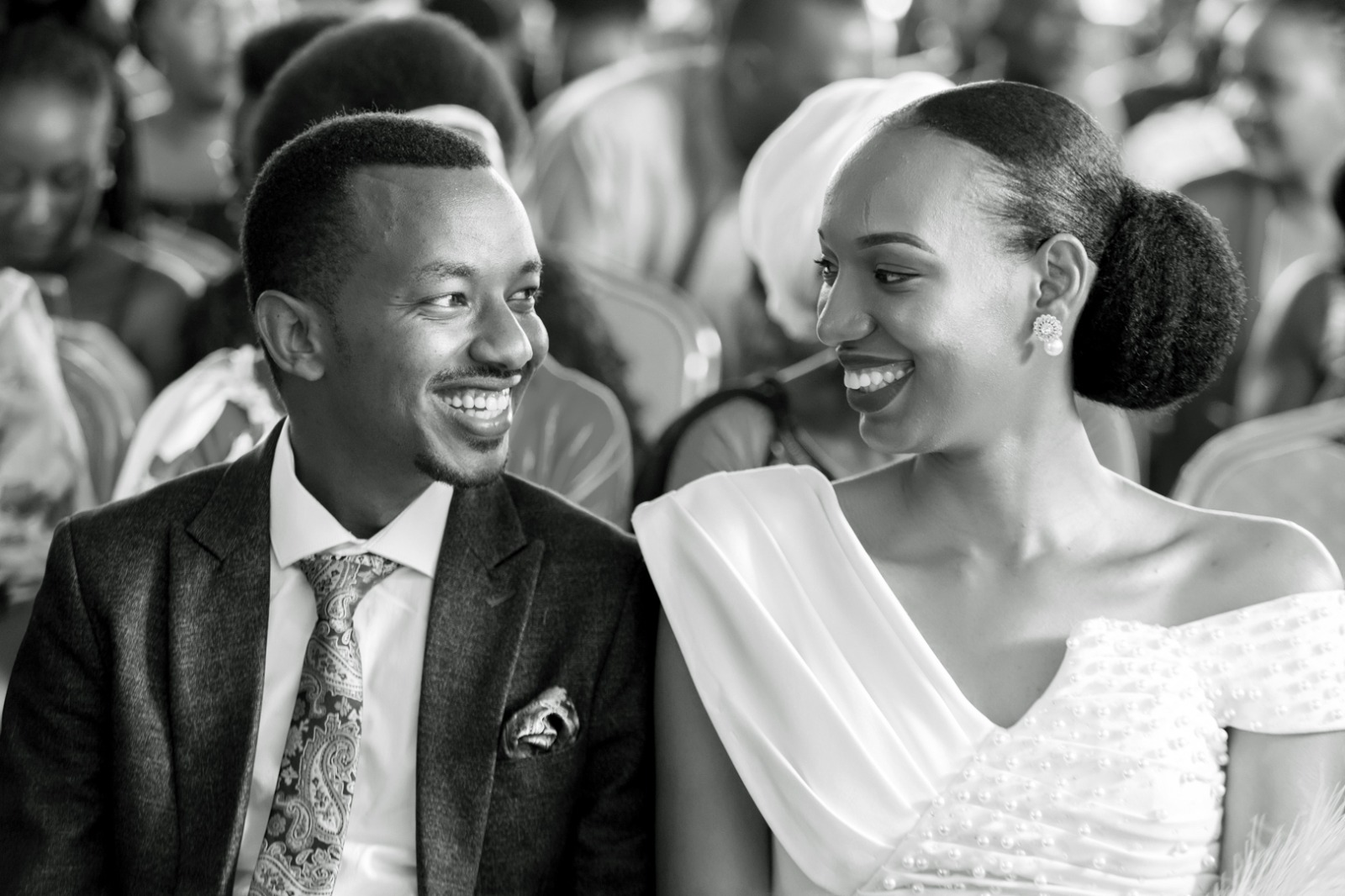
Photo: Alex Ndemezo