
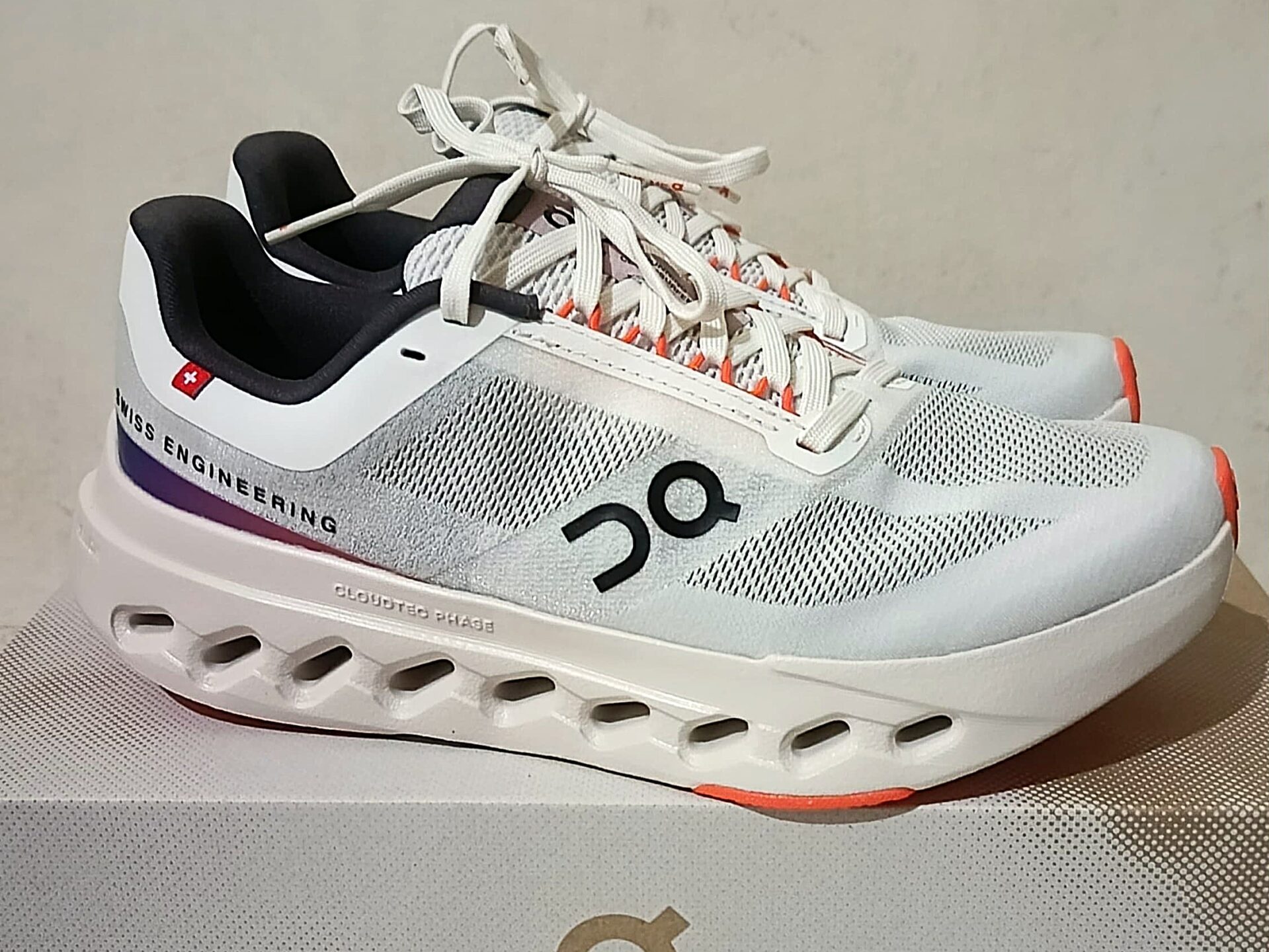
Last month, I was delighted to receive my dream shoes—the pair I once thought I would never own. They cost half of my monthly salary, yet I didn’t pay a single cent. They were a pasalubong from a member of my local congregation, and it was my first time receiving a pasalubong from America.1 (It’s common for Filipinos to ask for shoes as pasalubong from someone traveling to the U.S.)
The giver was a retired nurse who had just returned from the United States after her three-week vacation. She knew how much I loved walking and running, so she thought the shoes would suit me perfectly as a pasalubong, and they fit perfectly as well. She was an Overseas Filipino Worker (OFW), part of a family where three out of four siblings have worked abroad—two nurses and a pharmacist. All three have acquired dual citizenship, allowing them to move freely between the Philippines and the U.S.
Filipino stories all over the world
In our congregation, stories like hers are common. Many members have relatives working overseas or living permanently abroad after acquiring foreign citizenship. For decades, working abroad has been romanticized in the Philippines, often portrayed as the ultimate path to success or the “dream life.” Even the government reinforces this idea, calling OFWs “modern-day heroes” because their remittances contribute nearly 11% of the national economy.2 OFW remittances are the foreign exchange earnings sent home by Overseas Filipino Workers to support their families through formal channels like banks, money transfer companies, and digital platforms.
It never fails to amaze me whenever I travel abroad and hear people speaking the same local dialects I grew up with. In that instant, I’m reminded of how far the Filipino community reaches—proof that Filipinos and OFWs are truly everywhere. Yet, beneath that sense of pride lies a hint of sadness.
Why Filipino’s leave
It’s disheartening to realize that many Filipinos must leave their families and live far from home just to find fair compensation, decent working conditions, and better benefits. I don’t need exact statistics, and I don’t want to list numbers about how many Filipinos are working abroad for readers to understand this reality—every conversation with someone planning to work overseas echoes the same sentiment: “The salary there is way higher than here, and I can support my family well.” This simple yet powerful statement reveals the economic struggles, injustice, and oppression that drive millions of Filipinos to seek better job opportunities beyond the country’s borders.
The decision to work abroad, however, is never simple. It means leaving behind family, friends, and home. Yet many Filipinos take the leap, driven by the promise of higher salaries and better opportunities. For most, it’s not about personal ambition but about providing for their families—building homes for parents, paying off debts, sending siblings or children to school, supporting extended relatives, and, if possible, bringing the whole family to live and settle abroad.
The costs of a better life
There also exists a common misconception about the lives of those working overseas. Many people assume that OFWs live comfortably or even enjoy lives of wealth. In reality, however, the picture is often far more complex. Behind the perception of financial success are stories of sacrifice, homesickness, and hard work. Many OFWs strive not for luxury, but for a dream life—not just for themselves but for their families back home. Their selfless devotion to supporting their loved ones often comes at a great personal cost—and, at times, it is taken for granted or abused. There are countless stories of OFWs returning home after years of hard work abroad, only to find themselves with nothing left to their name. Many have given everything they earned to provide for loved ones, leaving no savings, no retirement fund, and no safety net for the future.
This dream life comes with a price. Distance takes a toll on family relationships. Many OFWs spend years away, returning home only for a short two- or three-week vacation. I’ve heard heartbreaking stories within the church—couples separating because one partner works overseas, or children struggling in school or becoming depressed because they miss their parents, who are both working abroad.
The sacrifices don’t end there. Many OFWs face emotional, physical, and even life-threatening challenges. Some experience depression or isolation; others suffer abuse, and a few tragically lose their lives at the hands of employers and never make it home. According to local news, 27 OFWs died due to foul play in the last ten years. This might seem like a small number, but it loudly speaks of the government’s failure to protect its people.3
Amidst the countless struggles and heart-wrenching stories of OFWs, many Filipinos still hold on to the dream of finding better opportunities abroad. The hope for a more stable and prosperous life drives thousands to seek employment overseas, even at great personal risk. Unfortunately, this strong desire and dream often lead some to fall prey to illegal recruitment schemes and human trafficking. With the rise of online platforms and social media, human traffickers have found new ways to deceive Filipinos through fake job offers and fraudulent recruitment websites. As a result, thousands become victims of human trafficking each year, turning their dreams into nightmares.
When government and systems fail
The government has failed to provide jobs for the people with just compensation and a healthy living environment. It has failed to protect OFWs—and not just them, but also their families and relationships. Unless the government takes decisive and bold action to control the prices of goods, create more job opportunities with good and healthy working conditions, and ensure better benefits and competitive salaries, be firm in taking legal actions against companies or employers that don’t follow the code of labor, many Filipino families will continue to struggle to meet even just their daily needs. As a result, many will keep making the difficult choice to work overseas—sacrificing time and distance with their loved ones in pursuit of financial stability and a better future.
Despite their struggles, OFWs are among the biggest supporters of my local church—a pattern I believe is common in many churches across the Philippines. Some continue to send their tithes and offerings to their home congregations. Even in their physical absence, they still take part in church ministries, especially the major ones. Some of our OFW members make an effort to be with the church during big celebrations such as Thanksgiving and Christmas.
Behind every success story of an Overseas Filipino Worker lies a struggle—a longing for home, for family, and for a life that doesn’t demand such distance.
Yet, amidst their generosity and loyalty, my church has failed them too. The reality is that most churches have no dedicated ministry for them or for the families they’ve left behind. I must admit that my church and I are guilty of overlooking an important group within our own community. Having served as a pastor for a decade, I realize that I have not yet developed or implemented a dedicated program or ministry in my past and present churches specifically designed to serve OFWs or their families. Beyond offering livestreamed Sunday worship services and midweek prayer meeting to help them stay connected, we have not intentionally created spaces or initiatives to minister to their unique needs. Their stories have become the norm—their struggles and sacrifices just another narrative of the realities of Christian suffering.4
A new ministry and a dream for a new future
As I write this, I find myself guilty of being silent about their personal and family struggles and of not seeing their lived realities. I am also reflecting on ways to better serve OFWs and their families here at home. I am currently contemplating a ministry dedicated to them—an initiative where their struggles, problems, and voices can be shared in safe spaces, and from there, we can develop ministries that cater to their needs and include them in next year’s church program and beyond. My hope is that, with the support and cooperation of my local congregation, this vision will soon become a reality and provide meaningful care for those who sacrifice so much for their loved ones.
Another thing I hope for is that the time will come when no members of any Filipino family need or even think to become OFWs or be far away from their loved ones to achieve and enjoy the dream life—the abundant life. May my impatience drive me to do everything I can and encourage my people to turn this hope into a living reality for our nation.
Behind every success story of an OFW lies a struggle—a longing for home, for family, and for a life that doesn’t demand such distance.
The shoes I received may symbolize a dream achieved, but they are also a great reminder of the price that my people, the Filipinos, pay to have their dream life.
Noten:
1 A Tagalog word for souvenir or something that is bought from other place to be taken home and be given to family or friends.
4 Emphasis made for a lot of church people views suffering as if it is compulsory experience of the Christians.
Mary Grace Selosa Jamin hails from the Philippines. She has been working full time in the church ministry for ten years now and present. She is Associate Minister for Missions and Evangelism of Baptist Center Church. She is one of the women ministers of the Convention of Philippine Baptist Churches.
Photo: Mary Grace Selosa Jamin