
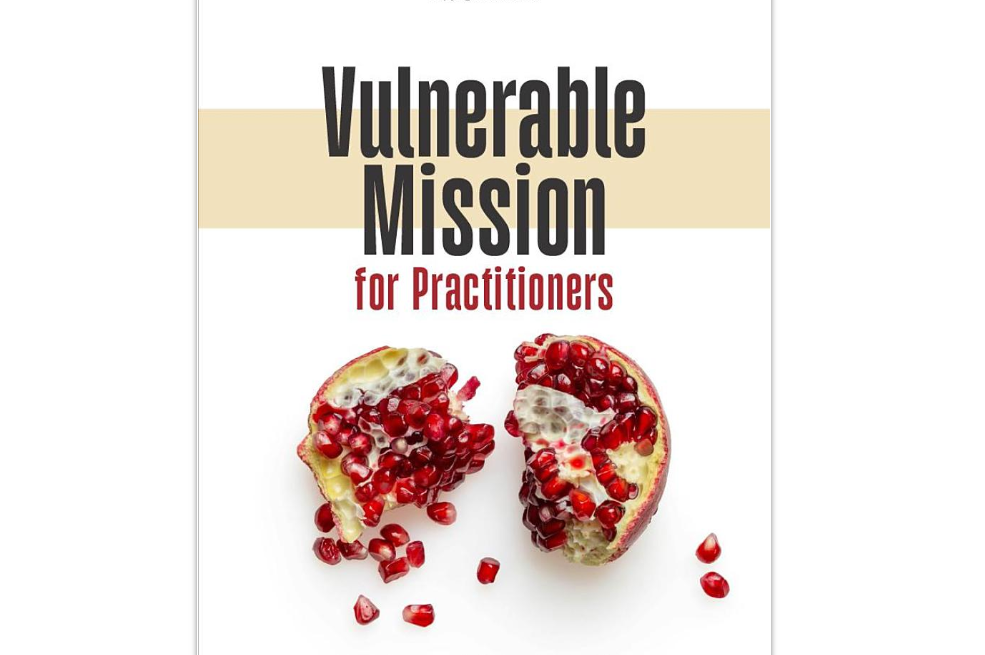
Kwetsbare zending – zending waarbij bewust wordt afgezien van de machtsprivileges van internationale talen en buitenlands geld, maar waarbij inheems eigenaarschap leidend is: afzien van macht in plaats van macht gebruiken, en zo de ministry style volgen van Jezus. Dat is het doel van de Alliance for Vulnerable Mission. Ze publiceerden het introducerende boek Vulnerable Mission for Practitioners (eds. Deborah Bernhard and Marcus Grohmann), en Jan Wessels van Faith2Share besprak het in de Evangelical Review of Theology van de WEA. Jan Wessels relateert de boodschap van het boek aan zijn eigen ervaringen van 18 jaar zendingswerk met het Naro-volk in Botswana. Met zijn toestemming nemen we zijn boekbespreking integraal (onvertaald) over.
This compact volume offers a lucid, field-tested proposal for cross cultural ministry that deliberately divests Western workers of their two most common forms of power: global languages and foreign funds. The editors define vulnerable mission as ministry carried out exclusively in indigenous languages and with local resources (at least in one’s key ministry contexts). The aim is not technique but discipline—a self-limitation that invites local ownership of the gospel and guards against dependency.
The book grounds this approach theologically (in the incarnation, the sending of the disciples, and the concept of power made perfect in weakness), draws contrasts with prevalent Western models such as project-driven aid, and supplies concrete case studies from Africa, Asia, Europe and the Americas to show what long-term, language deep, resource frugal ministry actually looks like.
The Alliance for Vulnerable Mission’s (AVM) twin commitments to using vernacular speech and indigenous means are stated without equivocation, yet with pastoral realism about how families, partner structures and safety concerns can constrain their implementation. The theologically deep, jargon-free argument that mission should align with Jesus’s voluntary weakness rather than managerial strength reads as a summons to conversion rather than a strategy manual. The chapters repeatedly return to Scripture’s pattern of costly, non-dominating witness, reframing success in terms of faithfulness, reproducibility and local agency.
The case studies add to the book’s credibility, showing how refusing outside money, learning the local language, and embracing unglamorous presence often feel slow and difficult yet bear durable fruit.
The presentation resonated with me because of my personal experience. In my 18 years among the Naro people in the Ghanzi District of Botswana, I encountered the very dynamics this book names. The Naro were not unreached, but they were largely unchurched—present in Setswana-speaking congregations but linguistically and culturally marginal. Our priorities were to learn the Naro’s own language, to facilitate Bible translation by Naro speakers, and to shape worship in Naro idioms rather than folding people into dominant lingua franca models. This process proved
slow and costly, and it was often misunderstood—by some Naro (for whom Setswana and English carried social advantage), by Setswana-language churches, and by crusade-oriented missions that prized numbers and visibility. But we were able, through this form of vulnerable mission, to enable local believers to increasingly take over ministry.
More generally, the growth and success of AICs—African Instituted (or Initiated, or Indigenous) Churches—illustrates the value of vulnerable mission well. Scholarly syntheses (e.g. by Allan Heaton Anderson) have shown that AICs, which constitute a significant share of sub-Saharan Christianity, embody an enduring missionary impulse of their own. Their growth has not depended on donor funding or imported ecclesial models but on deep cultural resonance and local ownership—precisely the dynamic this book encourages.
Missions historian Andrew F. Walls helps articulate why the AVM’s proposal matters. First, his oft-cited caution that ‘the past … has to be converted, turned toward Christ’ captures the task of redeeming cultures rather than suppressing them—a direct challenge to models that install external forms as normative. Second, Walls’s vernacular/translation principle—that Christianity possesses no sacred language and must be rendered in the mother tongues and conceptual worlds of every people—supplies the theological engine for the AVM’s two disciplines. Read through this lens, vulnerable mission is not a tactic but a commitment to the nature of the gospel itself as a translated (and endlessly translatable) Word.
The authors press hard in two areas that deserve continued debate. First, with regard to English-dominant or ‘multicultural’ spaces, the book argues that using global languages can conceal asymmetries and mute indigenous meanings, and that ‘inclusive’ teams may still privilege Western habits. That critique will sting, but the case studies and theology give it bite. This raises an important practical question: how might institutions (seminaries, agencies, networks) restructure to prioritize vernacular theologizing without defaulting to English for efficiency?
A second issue is holism without patronage. The AVM is rightly cautious about material generosity that signals a prosperity message or creates clientelism. Yet practitioners need workable patterns for diaconal care that avoid paternalism but do not withhold mercy. The book gestures toward giving ‘outside’ one’s key contexts; further examples would serve readers well.
Regardless of the presence of some unresolved issues, the book’s key point stands: if we do not change our language and resource posture, we should not be surprised when the results look like us.
This book is a courageous call to downwardly mobile mission—linguistically, financially and institutionally. Its thesis tracks with both micro-level practice (as I experienced among the Naro) and macro-level history (as seen in the AICs), as well as aligning with Walls’s central insights about how to facilitate mission that is received and owned locally rather than managed from abroad.
Not every reader will—or can—adopt the AVM’s disciplines fully. But anyone serious about post-colonial, non-dominating witness should grapple with this book’s central conviction that the gospel can best become deeply rooted in a culture when it is spoken in people’s own tongues and sustained by their own gifts. That method is slower, costlier and less photogenic, but it is also, more often than not, more authentic and lasting.
Besproken: Vulnerable Mission for Practitioners: A Simple—yet Challenging—Guide to Cross cultural Service without Dominance, Deborah Bernhard and Marcus Grohmann (eds.), Alliance for Vulnerable Mission, 2025 (ebook).
Bron: Evangelical Review of Theology, mei 2026 (50:1), p 100-102.
Voor een podcast-interview met Jim Harries over Vulnerable Mission, zie hier.