
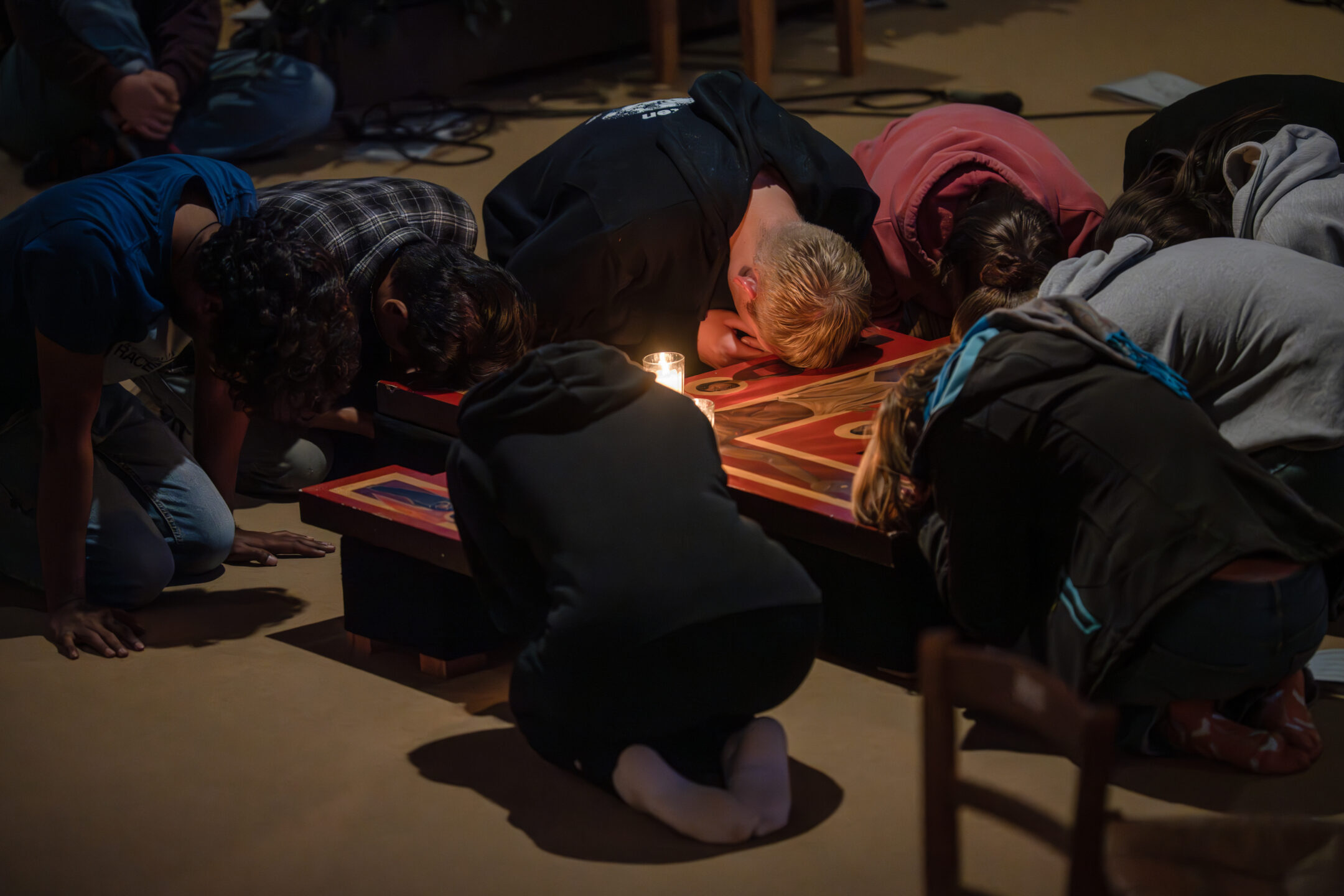
Why do thousands of young people travel every year to a small village in Burgundy, France? In an age characterized by digital communication, mobility, and increasingly individualized forms of spirituality, the continuing attraction of the Taizé Community raises an important question: what role does physical space play in the experience of faith?
At first glance, Taizé might appear to be primarily a community of people united by prayer and a desire for peace. Its international character, ecumenical spirit, and simple way of life certainly explain much of its appeal. Yet the physical environment in which these experiences take place should not be overlooked. It contributes to the way visitors experience faith.
A Community Built Around Reconciliation
The Taizé Community was founded by Brother Roger (Roger Schutz), a Protestant from Switzerland who arrived in the French village of Taizé in 1940, during the Second World War. At a time when Europe was divided by violence, fear, and hostility, he sought to establish a community committed to welcoming people in difficulty, including refugees fleeing persecution. The community gradually developed into an international, ecumenical monastic community, bringing together brothers from different Christian traditions and national backgrounds.[1]
Today, Taizé is known for its commitment to reconciliation, simplicity, hospitality, and Christian unity. Throughout the year, it welcomes many people, especially young adults from Europe and other parts of the world for meetings that combine prayer, biblical reflection, small-group discussions, practical work, and communal life.[2] Visitors are invited to reflect on their faith, their personal questions, and their responsibilities toward others.
Taizé is therefore more than a destination for religious tourism. It is a place where a particular way of living is practiced. Faith is expressed not only through words, doctrines, or individual devotion but also through everyday actions: welcoming strangers, sharing responsibilities, listening to different perspectives, and living alongside people from diverse backgrounds.
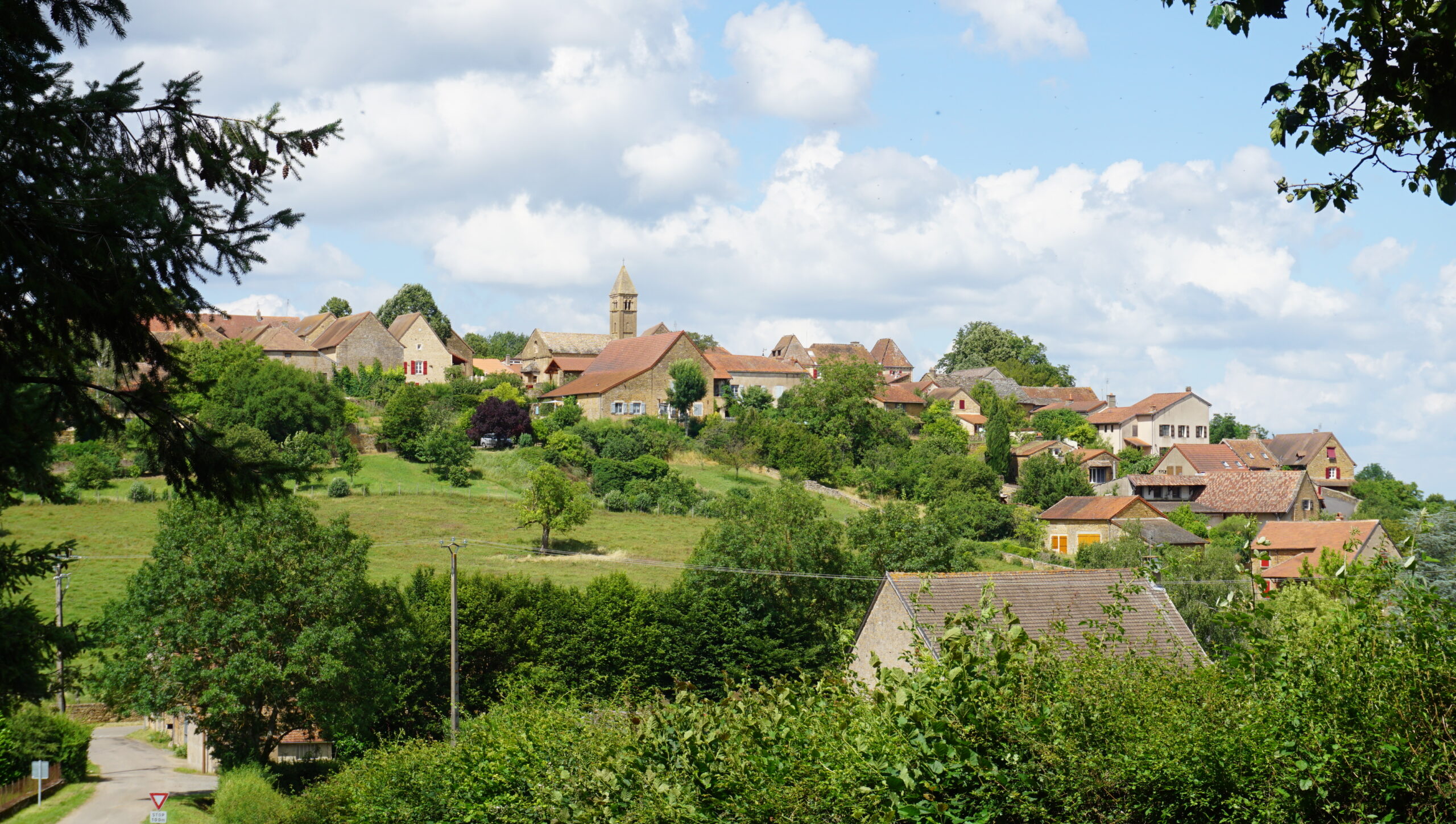
A Space for Prayer, Community and Personal Reflection
At Taizé, physical space can be understood in at least three interconnected ways: as a place for prayer, as an environment for community, and as a setting that encourages personal reflection.
A place for prayer
The Church of Reconciliation is one of the most recognizable spaces within the Taizé Community. Opened in 1962, it became a central gathering place for the community’s prayer and international meetings.[3]
Its significance lies not simply in its architectural form but in the activities that take place within it. Participants gather three times a day for common prayer, which includes meditative singing, biblical readings, and periods of silence. The physical setting helps establish the conditions for attention. Entering the church, sitting among strangers, listening to familiar songs repeated slowly, and allowing silence to continue without immediately filling it with words can encourage a different relationship with time and oneself.
The building does not automatically produce faith. Nevertheless, it can support the practices through which faith is explored and experienced. Physical space becomes meaningful because it gives spiritual practices a tangible setting.
An environment for community
Physical space at Taizé extends far beyond the church. Accommodation, dining areas, pathways, outdoor gathering places, and spaces for small-group discussion are also essential to the experience.
These spaces allow people to encounter one another outside formal worship. A conversation during a meal may become as significant as a moment of prayer. Walking with someone from another country, helping with practical tasks, or listening to a person whose beliefs differ from one’s own can challenge assumptions and create unexpected relationships.
The importance of these everyday spaces should not be underestimated. Community is not produced only by shared ideas; it is also developed through repeated encounters and ordinary activities. A dining area, for example, may not initially appear to be a religious space. Yet when people share food, make room for strangers, and participate in the same routines, the place can become an expression of hospitality. Similarly, accommodation shared by young people from different backgrounds makes diversity a lived reality rather than an abstract ideal. The physical environment therefore helps translate the values into everyday experience. Reconciliation becomes something that people practice through proximity, conversation, and cooperation.
An invitation to reflection
A third dimension concerns the relationship between physical space and inner life.
For some visitors, leaving home and travelling to Taizé creates a psychological distance from their ordinary responsibilities. Familiar routines are interrupted, and the usual social environment is temporarily replaced by a new one. This change can make it easier to reflect on questions that have been neglected: What do I believe? What direction should my life take? How do I relate to others? What does God mean to me?
The significance of Taizé’s physical space, therefore, lies not in its ability to guarantee a particular spiritual experience but in its capacity to make certain experiences possible.
The simplicity of the surroundings can contribute to this process. The landscape, the rhythm of prayer, and the absence of some everyday distractions create opportunities for contemplation. However, this effect is not universal. Some visitors may feel spiritually moved, while others may experience uncertainty, boredom, or disappointment. The same physical environment can mean different things to different people. The significance of Taizé’s physical space, therefore, lies not in its ability to guarantee a particular spiritual experience but in its capacity to make certain experiences possible.
A Holy Place?
In many religious traditions, certain places are regarded as holy because they are associated with divine encounters, sacred histories, worship, or pilgrimage. A place may become sacred through a community’s beliefs and practices, through its historical significance, or through the experiences that people associate with it.
Nevertheless, it is useful to distinguish between a place that supports an experience of holiness and a place that possesses holiness automatically or exclusively. God’s presence is not necessarily confined to particular geographical locations. Churches, monasteries, and pilgrimage sites may have special significance, but Christian faith also understands the possibility of encountering God in ordinary life: in relationships, acts of compassion, moments of silence, and service to others.
This perspective offers an important qualification. If Taizé is understood as holy only because people travel there, it risks becoming a destination whose spiritual value is measured by the intensity of a temporary experience. The deeper significance of the place emerges when what happens there influences how people live elsewhere. In other words, Taizé can be understood as a place where holiness is sought, experienced, and practiced, rather than as a location that monopolizes holiness. Its physical environment matters, but its meaning cannot be separated from the relationships and commitments that develop within it. The church becomes a place of prayer through prayer; shared spaces become places of hospitality through hospitality; and the community becomes a witness to reconciliation through the effort to live together across differences.
The Journey Continues: Can Faith Be Detached from Physical Space?
If prayer and fellowship happen easily in local churches or online communities, why travel to a small village in France? The answer cannot be reduced to a single explanation. Rather, in Taizé, pilgrims discover diverse elements that reinforce one another: community, prayer, silence, structured rhythms, service, diversity, simplicity, friendship, and nature. This naturally leads to a deeper inquiry: can faith truly exist independently of physical space?
To some extent, faith can certainly be practiced without a particular building or geographical location. Yet physical environments remain important because human beings experience the world through their bodies and their relationships with others. Physical spaces help the community become tangible. People can see the diversity of those gathered, hear their collective voices, experience shared silence, and participate in a common rhythm.
At the same time, the meaning of this experience depends on what pilgrims bring to it. A building cannot create reconciliation if people refuse to listen to one another. A gathering cannot guarantee spiritual transformation, and a beautiful setting cannot substitute for genuine relationships.
A building cannot create reconciliation if people refuse to listen to one another. A gathering cannot guarantee spiritual transformation, and a beautiful setting cannot substitute for genuine relationships.
The relationship between space and faith is therefore reciprocal. Physical space shapes the possibilities for religious experience, while the practices and relationships of a community give that space its meaning. A meaningful spiritual environment need not be defined by architectural grandeur or elaborate decoration. Simplicity, accessibility, repetition, and shared participation may be just as important as monumental design. What matters is how a place enables people to encounter themselves, one another, and the possibility of transcendence.
Perhaps the deepest significance of Taizé lies in the relationship between being in a holy place and learning to live a holy life. The physical environment provides a space in which faith can be explored and embodied, but the experience is not meant to end when the journey home begins. On the contrary, the community encourages young people not simply to remain attached to the experience of visiting Taizé but to return to their homes and local communities, carrying forward what they have discovered through prayer, solidarity, and encounter.
Ultimately, we are invited to reconsider the meaning of sacred space. A place becomes spiritually significant not only because people gather there to encounter God, but also because it helps them discover new ways of living with others. Its greatest contribution may be the realization that the experience of holiness, first encountered in a particular place, can continue wherever people practice trust, compassion, prayer, and reconciliation. Ubi caritas et amor, Deus ibi est ! (Where true charity and love are, God is there)
Brother Raymon is originally from Indonesia. He joined the Taizé Community in 2016.
Both pictures courtesy of © Taizé. Photographer title picture: Tamino Petelinšek.
[1] Taizé Community, “History,” accessed October 13, 2026, https://www.taize.fr/en/history.
[2] Taizé Community, “Coming to Taizé,” accessed October 13, 2026, https://www.taize.fr/en/coming-to-taize.
[3] Jean-Claude Escaffit and Moïz Rasiwala, Histoire de Taizé, (Paris: Éditions du Seuil, 2008 / updated ed. 2016), p. 61